



Generating leads is important for every business, but B2B companies often face a more complicated challenge: finding prospects who are not only interested but also a good fit for their products or services.
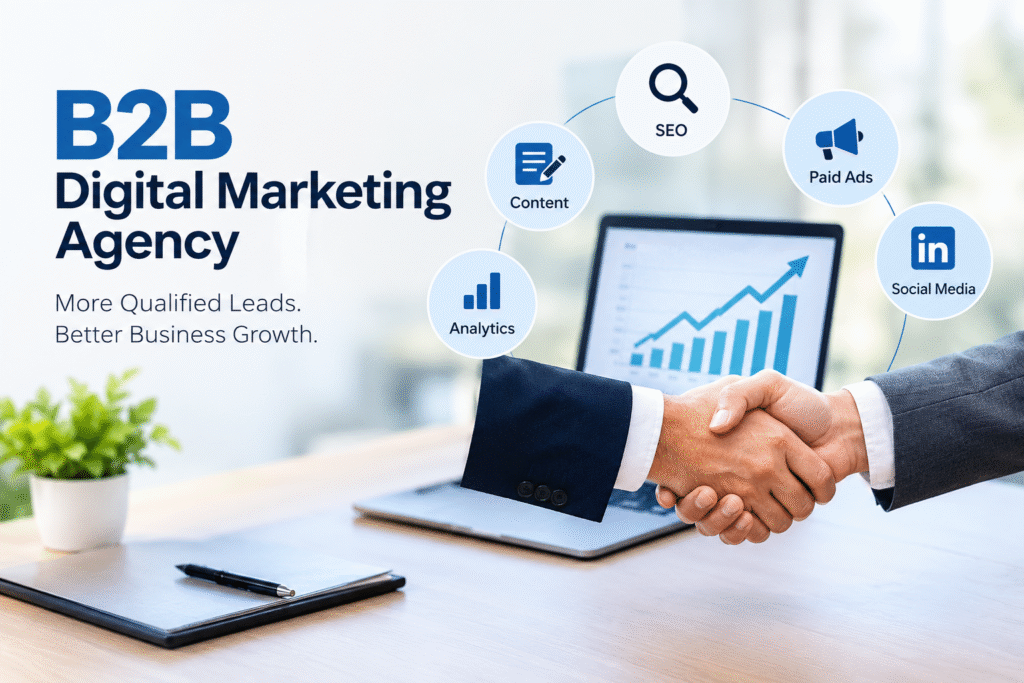
Unlike many consumer purchases, B2B buying decisions can involve multiple people, longer research periods, and several stages before a prospect becomes a customer. This is where a focused B2B digital marketing agency can make a meaningful difference.
A strategic digital marketing approach can help businesses reach the right audience, build trust, capture enquiries, and measure which marketing activities contribute to lead generation.
What Makes a B2B Lead High Quality?
A high-quality lead is more than someone who visits your website.
A useful B2B lead typically has a genuine business need, fits the company’s target market, and shows an interest in discussing a solution. For example, a visitor who downloads a general article may still be researching, while someone who requests a product demonstration or asks for a quotation may be further along in the buying process.
This means businesses should focus on lead quality as well as lead volume.
A successful digital marketing strategy should connect traffic generation with meaningful actions such as:
- Contact form submissions
- Demo requests
- Consultation enquiries
- Quote requests
- Phone calls
- Newsletter registrations
- Content downloads
Google Analytics can help businesses measure important website actions and understand how visitors interact with their digital channels.
How a B2B Digital Marketing Agency Supports Lead Generation
A B2B marketing strategy normally involves several connected activities rather than one isolated channel.
1. Identifying the Right Target Audience
Effective lead generation starts with knowing who you want to attract.
A B2B digital marketing agency can help define target customer groups by considering factors such as:
- Industry
- Company size
- Location
- Business requirements
- Decision-making roles
- Search behaviour
- Common pain points
- Buying intent
This information can then influence website content, SEO campaigns, advertising, social media activity, and landing pages.
Instead of trying to attract everyone, the strategy becomes focused on people who are more likely to need the company’s services.
2. Building a Strong SEO Foundation
Search engines can be an important source of long-term B2B leads because potential customers often research suppliers before contacting them.
SEO can help a business appear for relevant searches related to its products, services, problems, and solutions.
A B2B SEO strategy may include:
- Keyword research
- Service-page optimisation
- Helpful blog content
- Technical SEO
- Internal linking
- Local SEO where relevant
- Content optimisation
- Website performance improvements
The goal isn’t simply to rank for high-volume keywords. Content should answer genuine questions and provide useful information to potential buyers.
Businesses can also refer to Google Search Central for Google’s official guidance on creating search-friendly websites and useful content.
For businesses operating in London, website performance is also worth considering. Our article, Why Businesses in London Need Professional Web Development Services in 2026, explains how professional web development can support factors such as usability, performance, security, and business growth.
3. Creating Content That Supports the Buying Journey
B2B prospects rarely make a decision after reading one page.
They may first search for a problem, compare different solutions, research providers, and eventually look for pricing or a consultation.
Content can support each stage of that journey.
Early stage:
- Industry guides
- Educational blog posts
- Problem-solving articles
Middle stage:
- Service comparisons
- Case studies
- Expert guides
- Solution-focused content
Decision stage:
- Service pages
- Testimonials
- Pricing information
- Consultation pages
- Product demonstrations
This approach allows businesses to answer questions before a prospect contacts the sales team.
4. Improving Landing Pages and Conversion Paths
Getting visitors to a website is only part of the process.
If visitors cannot quickly understand what a company offers or what they should do next, valuable opportunities can be lost.
A digital marketing company in UK markets can help businesses improve landing pages by focusing on:
- Clear headlines
- Relevant messaging
- Strong calls to action
- Simple enquiry forms
- Trust signals
- Useful supporting information
- Mobile-friendly design
Google Analytics can also help businesses monitor important interactions and identify areas where visitors may leave before completing a desired action.
5. Using Paid Advertising to Reach High-Intent Prospects
Paid advertising can complement organic search and help businesses reach specific audiences more quickly.
Depending on the business model, campaigns may include search advertising, display campaigns, remarketing, or other digital advertising channels.
For B2B companies, the important factor is not simply generating clicks. Campaigns should be connected to meaningful business outcomes.
For example, instead of measuring success only through impressions, a company can monitor:
- Qualified enquiries
- Demo requests
- Consultation bookings
- Cost per lead
- Conversion rates
- Lead-to-customer rates
Businesses can use Google Ads to reach relevant audiences and connect advertising campaigns with measurable marketing objectives.
6. Using LinkedIn and Social Media Strategically
B2B buyers also spend time researching companies and industry information online.
Social media can therefore help businesses build familiarity and demonstrate expertise.
A B2B digital marketing campaign may use social platforms to share:
- Industry insights
- Company updates
- Educational content
- Case studies
- Expert opinions
- Customer success stories
- Service information
The objective should be to create useful interactions rather than repeatedly promoting the same sales message.
For B2B businesses, LinkedIn can also be used as part of a broader professional marketing strategy.
7. Connecting Marketing With Sales
One of the biggest challenges in B2B lead generation is the gap between marketing and sales.
Marketing may generate enquiries, while the sales team determines which opportunities are worth pursuing.
A stronger process defines what happens after someone becomes a lead.
For example:
Website visitor → Enquiry → Lead qualification → Sales contact → Proposal → Customer
Businesses can establish criteria for qualified leads based on factors such as company fit, budget, requirements, location, and buying intent.
This helps sales teams spend more time on opportunities that match the company’s target customer profile.
Why Website Quality Matters for B2B Lead Generation
Your website is often one of the most important parts of your digital marketing system.
Even a strong advertising or SEO campaign can struggle if the website is slow, confusing, difficult to navigate, or poorly structured.
A professional website should make it easy for potential customers to:
- Understand what the business offers.
- Find relevant information.
- Evaluate the company’s expertise.
- Trust the business.
- Take the next step.
Google’s Page Experience guidance explains several aspects of creating a good experience for website visitors, including page performance, mobile usability, security, and overall user experience.
This is why digital marketing and web development should not always be treated as completely separate activities.
Why Outsourcing Digital Marketing Can Help B2B Companies
Building an internal marketing team can require investment in people, tools, training, strategy, content production, analytics, SEO, advertising, and campaign management.
Working with an experienced agency can provide access to a broader range of skills within one marketing function.
For businesses considering this approach, our article Why Hiring a Digital Marketing Agency Is Better Than Building an In-House Team explores the differences between agency support and maintaining an entirely in-house operation.
The right approach depends on the company’s resources, goals, industry, and existing team structure.
Measuring the Quality of B2B Leads
Lead generation should be measured beyond traffic numbers.
Useful metrics can include:
| Metric | What It Helps Measure |
|---|---|
| Organic traffic | Visibility from search |
| Landing page conversion rate | Visitor-to-lead performance |
| Cost per lead | Advertising efficiency |
| Qualified leads | Lead relevance |
| Lead-to-customer rate | Sales effectiveness |
| Conversion rate | Overall performance |
| Customer acquisition cost | Cost of gaining customers |
Using analytics tools helps businesses connect marketing activity with important website actions and identify which channels contribute to enquiries and conversions.
Common Mistakes B2B Businesses Should Avoid
Focusing Only on Traffic
Thousands of visitors do not necessarily mean thousands of potential customers. Relevant traffic is generally more useful than traffic that has little connection with your target market.
Using the Same Message for Everyone
Different industries and decision-makers have different requirements. More specific messaging can make a website and campaign more relevant.
Ignoring the Website Experience
If a website creates friction after someone clicks an advertisement or search result, marketing investment can be wasted.
Measuring Only Clicks
Clicks and impressions can provide useful information, but businesses should also track enquiries, qualified leads, and customer conversions.
Publishing Content Without a Clear Purpose
Every piece of content should have a reason to exist. It could answer a customer question, explain a service, support a buying decision, or strengthen the company’s expertise.
A Practical B2B Lead Generation Framework
A simple framework can help businesses organise their digital marketing activities:
Research → Attract → Educate → Convert → Qualify → Nurture → Measure
First, understand the target audience.
Then attract relevant prospects through SEO, content, advertising, social media, or other appropriate channels.
Next, provide useful information that helps prospects understand their options.
Once they are ready, make it easy for them to enquire or request a consultation.
After that, qualify leads and connect suitable opportunities with sales.
Finally, measure the results and use the data to improve future campaigns.
Final Thoughts
High-quality B2B leads rarely come from one marketing activity alone. They are usually the result of having the right audience, useful content, a strong website, relevant campaigns, clear conversion paths, and reliable measurement working together.
A B2B digital marketing agency can bring these elements together into a structured strategy designed around business goals rather than vanity metrics.
For companies looking for a digital marketing agency UK or a digital marketing company in UK, the most important consideration is finding an approach that matches the company’s audience, sales process, industry, and long-term objectives.
The aim should not simply be to generate more leads. It should be to create a marketing system that consistently attracts relevant prospects and gives the sales team better opportunities to convert them into customers.
Related Posts

Why Hiring a Digital Marketing Agency Is Better Than Building an In-House Team
Digital marketing has become an important part of how businesses attract customers, build visibility, and…
The Ultimate Digital Marketing Guide for Business Growth in 2026
In 2026, businesses can no longer rely only on traditional advertising to attract and retain…
How Data Analytics Improves Digital Marketing Decisions
In today’s competitive online marketplace, successful marketing is no longer based on guesswork. Every click,…
Email Marketing vs Social Media Marketing: Which Is Better for ROI?
In today’s competitive online landscape, businesses are constantly looking for marketing channels that generate the…