



A website can look impressive and still fail to generate leads or sales. Attractive colors, professional images, and modern layouts are important, but they are only part of what makes a website successful.
The real value comes when web design and development work together. Design creates the experience visitors see and interact with, while development makes that experience functional, fast, secure, and reliable.
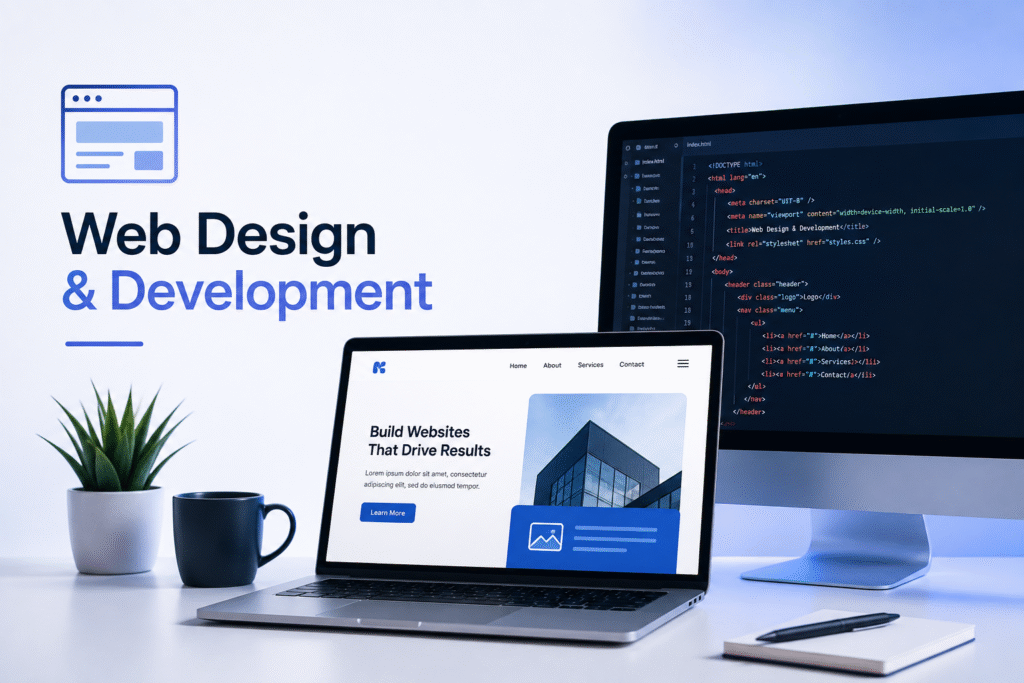
When both areas are planned around the needs of users and business goals, a website can provide a smoother customer journey and create more opportunities for conversions.
What Is the Difference Between Web Design and Web Development?
Web design focuses mainly on how a website looks and how visitors experience it. It includes elements such as:
- Page layouts
- Typography
- Colors
- Navigation
- Buttons
- Images
- User interface
- Mobile responsiveness
Web development focuses on the technical side of the website. Developers turn design concepts into working pages and features using appropriate technologies.
Development can involve:
- Front-end functionality
- Back-end systems
- Databases
- APIs and integrations
- Forms
- Ecommerce functionality
- Website security
- Performance optimization
Although these roles are different, they are closely connected. A beautiful design needs reliable development to work properly, while technically strong development needs thoughtful design to provide a useful user experience.
Why Web Design and Development Matter for Conversions
A conversion happens when a visitor completes an action that matters to a business. This could be submitting a contact form, requesting a quote, booking an appointment, purchasing a product, or signing up for a service.
Several factors influence whether visitors take that action.
A website that is confusing, slow, difficult to navigate, or uncomfortable to use on mobile devices can create unnecessary barriers. Good design and development help remove those barriers.
1. Create a Clear User Journey
Visitors should understand what a website offers without having to search through multiple pages.
Effective web design creates a logical structure that guides visitors from one stage to another. Development then ensures navigation, links, buttons, forms, and interactive elements work as intended.
For example, a service website might guide a visitor through:
Homepage → Service → Benefits → Proof → Contact → Enquiry
A clear journey can make it easier for potential customers to find information and decide what to do next.
2. Make Calls to Action Easy to Find
Calls to action tell visitors what they can do next.
Examples include:
- Get a Quote
- Book a Consultation
- Contact Us
- Start Your Project
- Request a Demo
- Buy Now
Good design makes important CTAs noticeable without making the page feel crowded. Development ensures that these buttons actually perform the intended action.
A CTA that looks great but leads to a broken page or malfunctioning form can quickly damage the user experience.
3. Improve Mobile Experience
A large portion of website traffic can come from smartphones and tablets. A website therefore needs to work comfortably across different screen sizes.
Responsive web design allows layouts to adapt to different devices. Development supports this by ensuring menus, forms, images, buttons, and interactive features function properly on smaller screens.
Mobile usability is especially important for businesses that depend on enquiries, ecommerce transactions, or local customers.
4. Improve Website Speed
Visitors do not want to wait for pages to load.
Large images, unnecessary scripts, poorly implemented features, excessive plugins, and inefficient code can affect website performance.
Designers can help by creating efficient layouts and optimizing visual elements. Developers can improve the technical implementation through appropriate coding, caching, image handling, and other performance techniques.
Better performance can contribute to a more comfortable browsing experience and reduce friction during the customer journey.
5. Build SEO-Friendly Websites
Search engine optimization is not something that should be added only after a website is finished.
Design and development decisions can influence how easily search engines understand and access a website. Businesses can review Google’s official SEO Starter Guide for practical guidance on creating search-friendly websites.
A well-planned website can include:
- Logical page structures
- Clear headings
- Descriptive URLs
- Mobile-friendly layouts
- Fast-loading pages
- Accessible content
- Proper internal linking
- Search-friendly technical implementation
This is one reason businesses often benefit from combining SEO planning with professional web design and development services.
6. Make Forms Simple
Forms are often an important part of lead generation.
A complicated form can discourage visitors from completing it. Designers can simplify the visual experience, while developers can make sure the form validates information correctly, works across devices, and sends enquiries reliably.
Businesses should generally ask only for information they genuinely need at that stage of the customer journey.
For example, a basic consultation request may not require a visitor to provide ten different pieces of information.
7. Build Trust Through Design and Functionality
People are more likely to interact with a website when it feels trustworthy.
Design can communicate professionalism through consistent branding, readable content, quality visuals, testimonials, case studies, and clear information.
Development supports that trust by providing secure forms, reliable functionality, HTTPS, sensible error handling, and stable website performance.
Trust is especially important when visitors are being asked to provide personal information or make a purchase.
8. Use Data to Improve Conversions
Launching a website is not the end of the process.
Businesses can use analytics to understand how visitors interact with important pages. Tools such as Google Analytics can help businesses measure website traffic, user engagement, and important actions.
For example, if many visitors reach a contact page but few submit the form, the business can investigate whether the form is too long, unclear, difficult to use, or missing important information.
Design and development teams can then test improvements based on actual user behavior rather than assumptions.
How a Web Design and Development Agency Can Help
Working with a professional web design and development agency can bring design and technical expertise together under one project.
Instead of treating design and development as separate tasks, an experienced team can consider the entire website experience from the beginning.
A typical process may include:
Research and Planning
The team identifies business objectives, target audiences, competitors, customer journeys, and required functionality.
UX and UI Design
Wireframes and visual designs establish the structure, navigation, content hierarchy, and appearance of important pages.
Development
Developers turn approved designs into functional website pages and features.
Testing
The website is tested across devices and browsers to identify usability, performance, accessibility, and functionality issues.
Launch and Optimization
After launch, website performance and conversion data can be monitored. Improvements can then be made as new opportunities are identified.
Choosing the Right Web Development Approach
Not every business needs the same technology or website structure.
A small service business may need a straightforward lead-generation website, while an ecommerce company may require product management, payment processing, customer accounts, inventory connections, and other functionality.
The right web development approach should therefore be based on business requirements rather than simply choosing the newest technology.
The goal is to create a website that is useful for visitors and practical for the business to manage and grow.
Common Mistakes That Can Hurt Conversions
Even a professionally designed website can lose potential customers if important details are overlooked.
Common problems include:
- Too many competing calls to action
- Confusing navigation
- Slow page loading
- Poor mobile usability
- Weak or unclear messaging
- Long and complicated forms
- Broken links or interactive features
- Difficult-to-read content
- Lack of trust signals
- Ignoring analytics after launch
Avoiding these issues requires collaboration between design, development, content, SEO, and marketing teams.
Final Thoughts
Web design and web development are most effective when they work as one process.
Design determines how visitors understand and interact with a website, while development makes that experience functional, fast, secure, and scalable. When both are built around user needs and measurable business objectives, the website has a stronger foundation for generating enquiries, sales, and other valuable actions.
For businesses planning a new website or improving an existing one, investing in professional web design and development services can be more valuable than focusing on appearance alone.
A successful website should not simply look good. It should make it easier for the right visitors to take the right action.
Related Posts
The Future of Web Development: Top Trends Every Business Should Know in 2026
A business website is no longer just an online brochure. It has become the foundation…
Why Ongoing Website Maintenance Is Critical for Business Success
A website is one of the most valuable assets a business owns. It represents your…

How to Turn Website Visitors into Qualified Leads: A Complete Guide to Website Lead Generation
Your website attracts visitors every day—but are those visitors becoming customers? Many businesses invest heavily…

Why Every Business Needs Responsive Web Design in 2026
In 2026, customers expect websites to work flawlessly on every device, whether they’re browsing on…